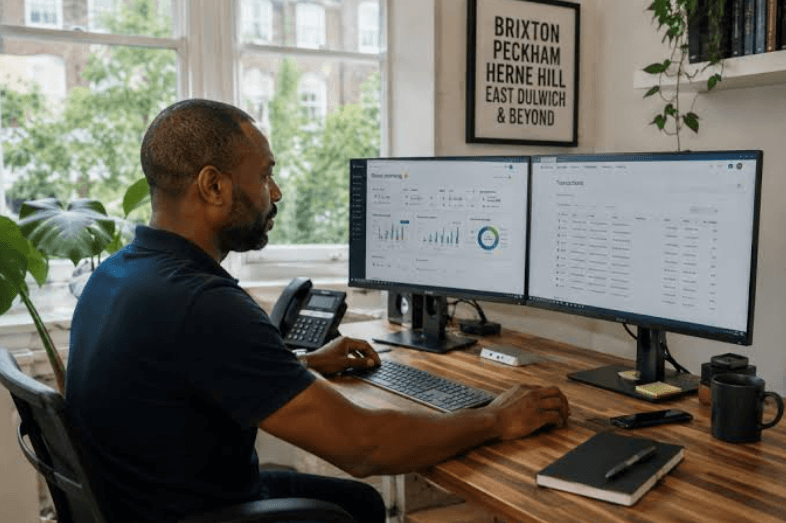
Digital accounting has become increasingly important for UK sole traders, and 2026 marks a significant point in that transition. Making Tax Digital for Income Tax is now part of the reporting framework for the first group of qualifying taxpayers, making reliable digital records more important than ever.
For sole traders, however, the real opportunity goes beyond meeting HMRC requirements. Better bookkeeping can provide clearer information about income, expenses, cash flow and future tax liabilities throughout the year.
The aim should be to create a financial routine that makes the business easier to manage as well as easier to report.
Understand how money moves through the business
Before choosing software or changing an existing accounting process, a sole trader should understand how financial activity currently flows through the business.
Consider where customers pay, how expenses are incurred and where invoices and receipts are stored.
A consultant receiving bank transfers may have a relatively straightforward process. A tradesperson could be managing materials, fuel, subcontractors and equipment. An online seller may receive money through several platforms before funds reach the bank.
The accounting setup should reflect these differences.
Create one reliable source of financial information
Problems arise when financial records are spread across bank statements, spreadsheets, email accounts, paper receipts and separate applications.
A digital accounting system should bring the key information together.
That does not mean every business needs a complicated technology stack. It means there should be a clear place where income and expenditure are recorded and where the current financial position can be reviewed.
Consistency is more important than complexity.
Keep bookkeeping up to date
Small regular checks prevent major corrections
Bookkeeping should become a routine rather than an annual project.
A sole trader might set aside time each week to review recent transactions, collect missing documents, match customer payments and reconcile the business bank account.
This also provides an opportunity to identify unusual costs or invoices that remain unpaid.
Working with accountants for sole traders managing tax and bookkeeping can help business owners establish a consistent accounting process when managing the records internally is becoming difficult or taking too much time away from client work.
Use software as a tool rather than the solution
Accounting software can automate many repetitive tasks, but it cannot guarantee that the records are correct.
Bank feeds may import transactions automatically, yet those transactions still need appropriate categorisation. Receipt-capture tools can save time, but information may still require checking.
Automated rules should also be reviewed periodically because an incorrect rule can repeat the same error across many transactions.
The strongest system combines technology with regular human oversight.
Use current records to improve tax planning
One major disadvantage of leaving bookkeeping until year end is that tax becomes difficult to anticipate.
When income and costs are current, a sole trader can maintain a working estimate of profit and consider how much cash should be reserved for future liabilities.
The figure may change during the year, but it is still useful for planning.
This helps prevent a situation where the bank balance appears healthy but a significant proportion of the money is already needed for tax.
Monitor customer payments
Financial management is not limited to recording transactions that have already occurred.
Sole traders who invoice clients should also review what remains unpaid.
Outstanding invoices can create cash pressure even when the business appears profitable.
A regular review should identify which invoices are overdue, which customers regularly pay late and whether payment terms need to be improved.
Better credit control can sometimes strengthen cash flow without requiring any increase in sales.
Review costs instead of simply recording them
Bookkeeping provides useful evidence about where money is going.
Recurring subscriptions, insurance, advertising, software and professional costs should be reviewed periodically.
An expense may have been worthwhile when it was first introduced but no longer provide sufficient value.
Looking at costs by category makes these patterns easier to identify.
Create a simple monthly financial review
Sole traders do not necessarily need complex management accounts, but they should understand a few core figures.
A monthly review can examine revenue, operating expenses, profit, available cash, outstanding customer invoices and expected tax.
Comparing these figures with previous months can highlight changes before they become significant.
The purpose is not to create more administration. It is to give the owner enough information to make informed decisions.
See also: How Technology Is Supporting Small Business Growth
Prepare before the business becomes more complex
Accounting systems should be reviewed as the business changes.
Hiring someone, registering for VAT, adding a new sales channel or significantly increasing turnover may create new requirements.
A process that worked when the business was small may need stronger controls and more frequent reporting later.
Addressing this gradually is easier than rebuilding the records after complexity has already increased.
Final thoughts
Making Tax Digital is an important development for sole traders in 2026, but digital accounting should provide more than compliance.
Current bookkeeping can improve cash visibility, make tax easier to anticipate and show where the business is performing well or experiencing pressure.
The most effective setup does not need to be complicated. It needs to be reliable.
By maintaining organised digital records, reviewing financial information regularly and understanding future obligations, sole traders can spend less time reconstructing their finances and more time using those figures to run the business effectively.
